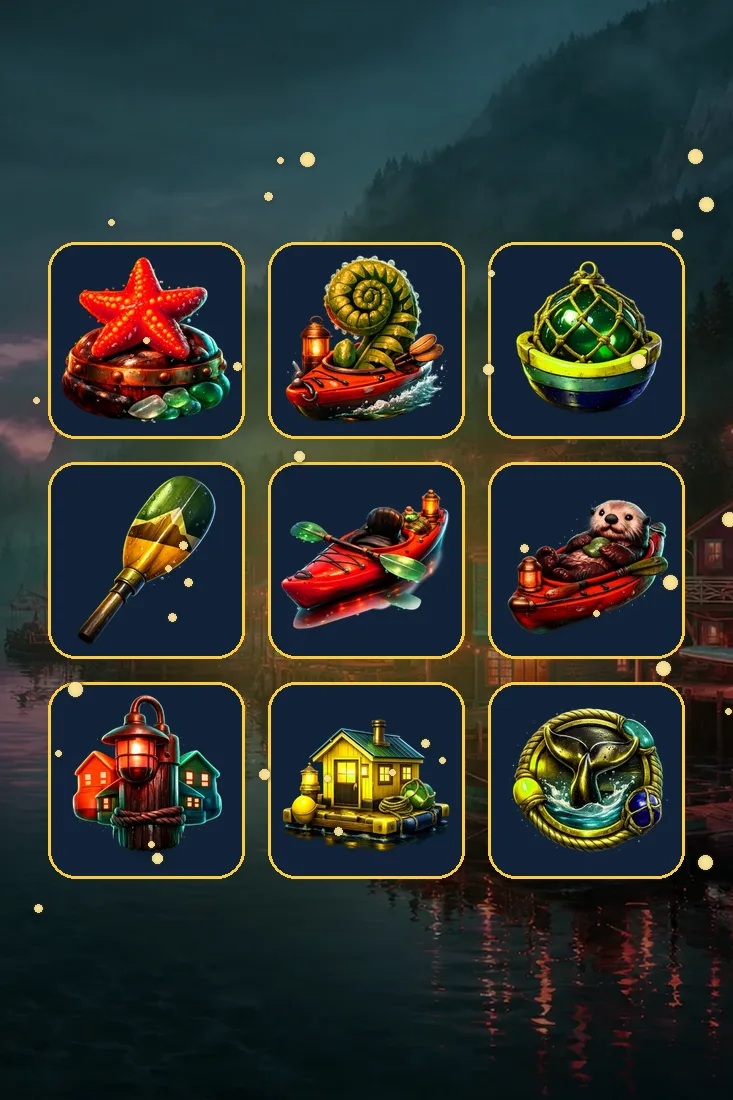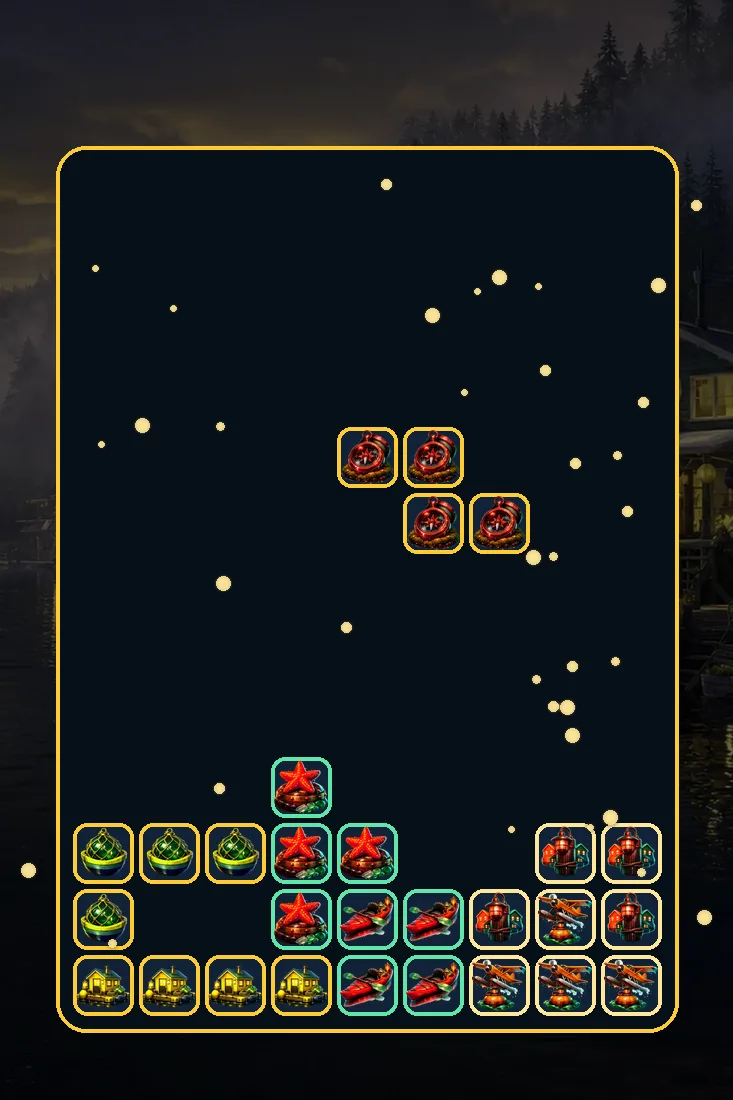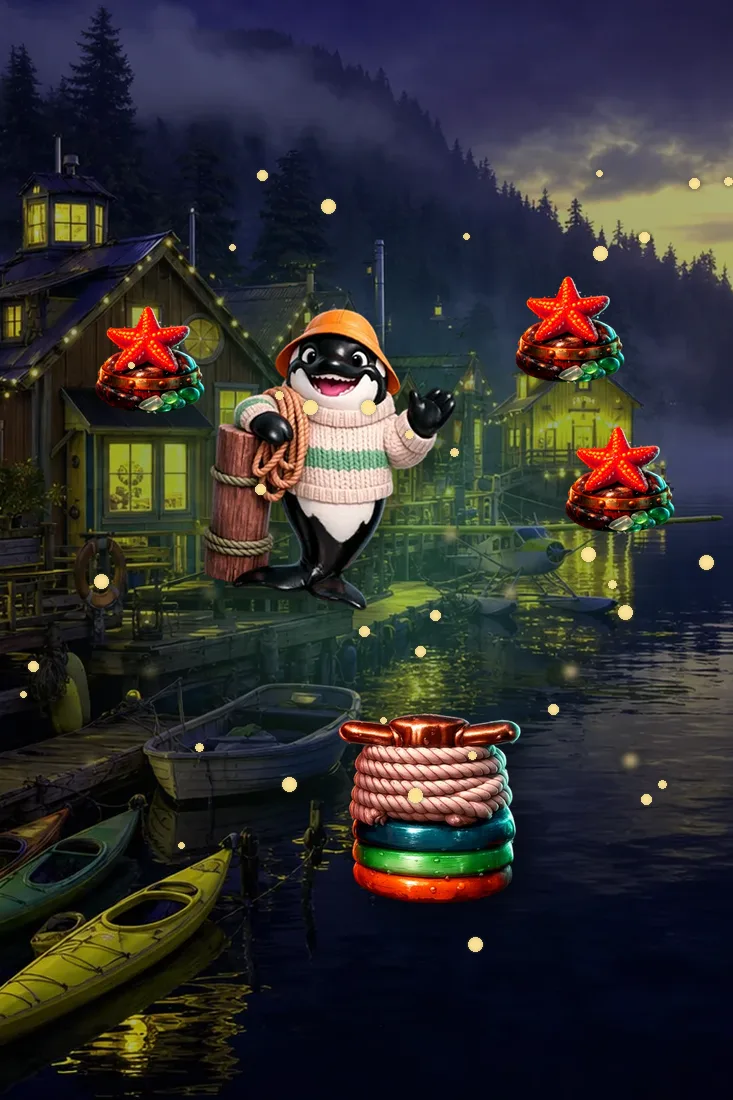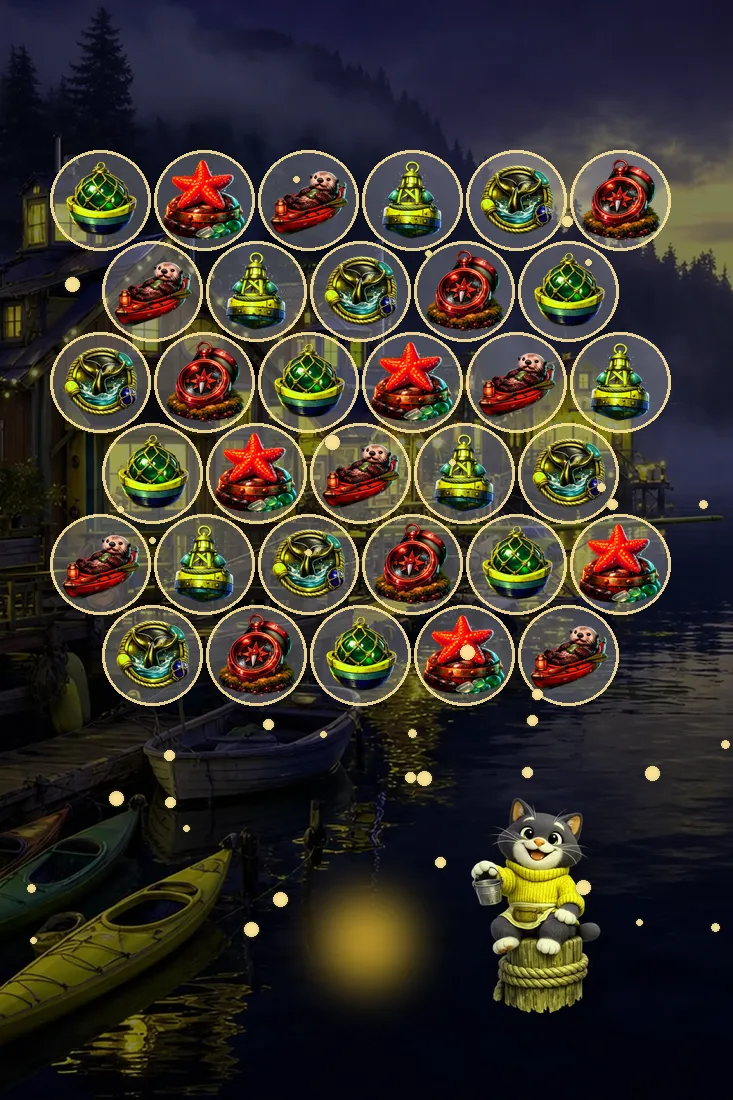
Glass Float Pop is our bubble shooter, set under a crowded sky of harbour treasures: green glass floats in their netting, orange sea stars, sea otters, tufted puffins, brass orca crests and moss-bed compasses, packed together in a honeycomb grid. Marlo, our stocky dock cat in his mustard jumper, sits beside the launcher at the bottom of the screen, and the next piece waits in his care.
Aim and send a piece up into the grid. Where it touches, it sticks. If it joins two or more of the same kind, the whole group pops. Anything left hanging without a connection to the top falls away too, which is where the big scores live. Every few shots the ceiling creeps lower, so standing still is never quite an option. Clear the board to finish the level.
How to play Glass Float Pop
- Press Play, then move your pointer or use the arrow keys to swing the aiming line.
- Send the waiting piece up into the grid; it sticks wherever it first touches something.
- Join three or more matching pieces to pop them, and cut loose any clusters hanging below.
- Bounce shots off the side walls to reach pockets that the straight path cannot touch.
- Clear every piece before the slowly lowering ceiling reaches the launcher at the bottom.
Glass Float Pop controls
Getting better at Glass Float Pop
- Look for pieces holding up a big cluster; popping that anchor drops far more than a single match.
- Use the side walls freely. A banked shot often reaches a pocket the straight line cannot.
- Glance at the waiting piece before you shoot so you can plan two moves rather than one.
- Count shots as the ceiling lowers and clear the bottom rows first when it gets close.
- When a colour has nowhere useful to go, park it out of the way rather than blocking a cluster.
Why the wall shot is the whole game
Straight shots are fine for the first minute. After that the grid fills with awkward pockets tucked behind the wrong colours, and the only way in is off the side wall. We tuned the bounce so it behaves just as you would expect, angle in and angle out, which means you can line up a banked shot with confidence instead of crossing your fingers.
Once wall shots become second nature, the board stops looking like a mess and starts looking like a set of opportunities. You will spot a puffin cluster clinging to one lonely float near the top and realize a single bounce can bring the whole thing down. That moment, when a third of the board rains into the water, is why we built this game first.
Living with a ceiling that keeps coming down
Every so often the whole grid shifts down a step. It is a gentle nudge rather than a punishment, and you can always see it coming because it happens on a steady count of shots. It stops a level from stretching on forever and makes each careful aim feel like it matters.
The best defence is a steady rhythm. Early on, take time to set up big drops. As the grid nears the launcher, switch to clearing low rows and chipping away at whatever threatens you first. Levels are shaped from the cove’s own seed, so each one has its own layout to learn, and finding the anchor pieces quickly becomes a skill all of its own.
Questions about Glass Float Pop
Three or more of the same kind touching each other. Your shot counts as one of them, so landing beside a pair is enough to pop all three.
Pieces need a link back to the top of the grid. When you pop the ones holding a cluster up, everything hanging below loses its connection and drops away for extra points.
It lowers after a set number of shots. Keep an eye on the bottom rows as you play, and clear them first whenever the grid starts creeping close to Marlo and the launcher.